Your Website Has About Three Seconds
Research consistently shows that most visitors abandon a website if it hasn't loaded within three seconds. For a small business in Hawaii competing for attention from both locals and tourists, those three seconds are everything. A slow website doesn't just frustrate people; it quietly costs you phone calls, form submissions, and sales.
The good news is that website speed is measurable, fixable, and one of the highest-return improvements you can make for your business online.
What a Speed Test Actually Tells You
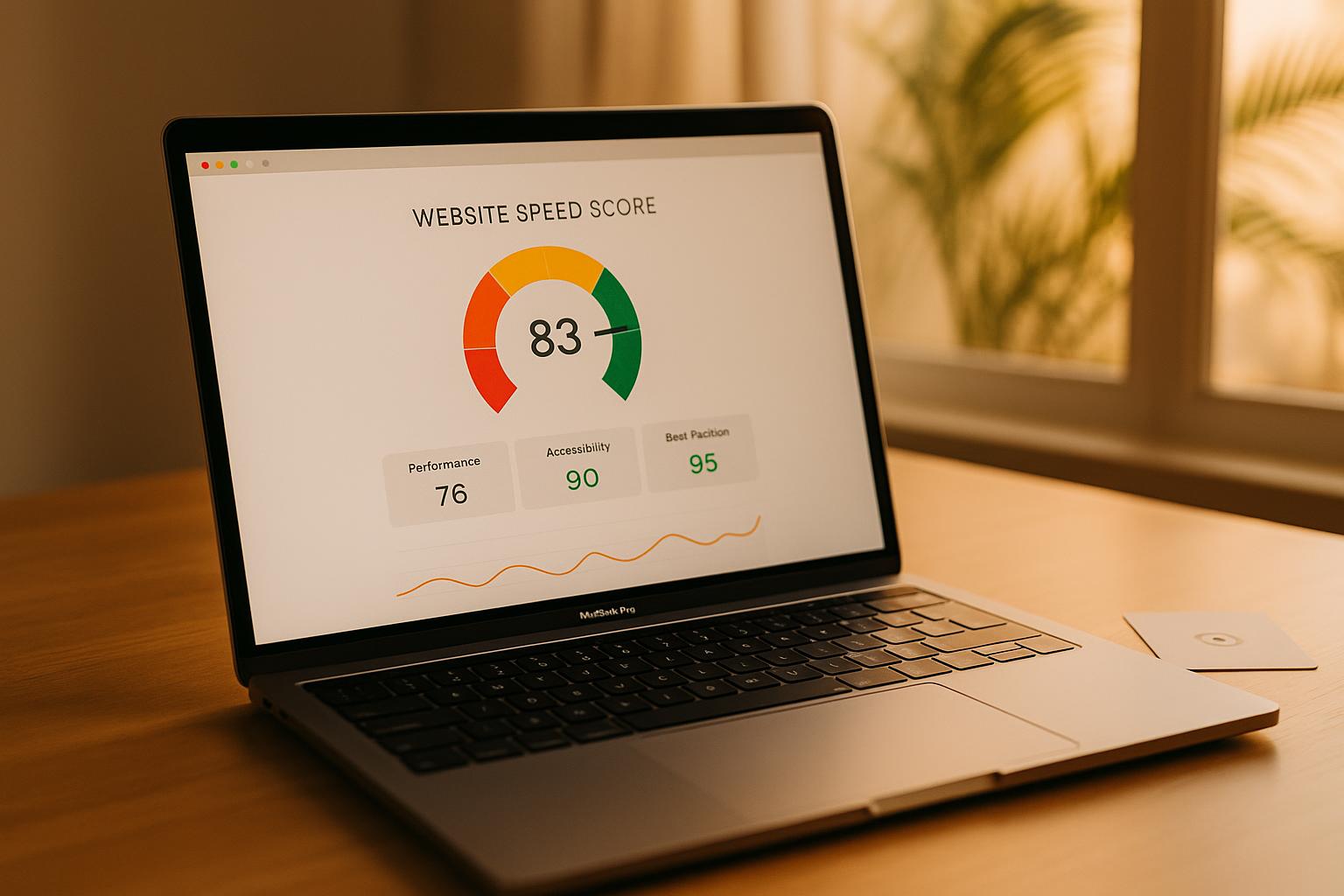
Tools like Google PageSpeed Insights, GTmetrix, and WebPageTest give your site a score and break down exactly what's slowing it down. You'll see metrics like Largest Contentful Paint (LCP), which measures how long it takes for the main content to appear, and Time to First Byte (TTFB), which reflects how quickly your server responds at all.
Most small business owners run a speed test, see a low score, and have no idea what to do next. The report reads like a foreign language. That's normal. What matters is understanding the categories of problems, so you know what's worth fixing.
Common Reasons Hawaii Business Websites Load Slowly
Images that haven't been optimized. A photo taken on a modern phone can be 5–10 MB. Uncompressed, that single image can tank your load time.
Too many plugins. This is especially common on WordPress sites. Each plugin adds code that the browser has to download and process before your page appears.
A slow hosting server. Shared hosting plans that cost a few dollars a month often put your site on an overloaded server. If the server is slow to respond, nothing else matters.
No caching or content delivery network (CDN). Without a CDN, every visitor's request travels to a single server, wherever it's physically located. For visitors in Hawaii, that round trip can add real latency.
Render-blocking scripts. JavaScript and CSS files that load before your page content force the browser to wait before showing anything to the visitor.
Why Speed Matters Even More for Oahu Businesses
Think about your typical customer. Maybe they're a tourist standing in a Waikiki hotel lobby, searching on their phone for a snorkeling tour or a plate lunch spot nearby. Mobile connections in Hawaii vary widely, and if your site isn't optimized, you lose that customer to a competitor whose page loaded first.
Local customers aren't much different. Someone in Kapolei or Pearl City searching for a plumber or a dentist on a lunch break isn't going to wait for a slow site. They'll hit the back button and call whoever loads next.
Speed is also a direct Google ranking factor. A faster website for your Honolulu or Ewa Beach business means better placement in local search results, which means more organic traffic without spending more on ads.
The WordPress Speed Problem
If your site runs on WordPress, speed issues often come with the territory. WordPress is a dynamic platform, meaning it builds each page from scratch every time someone visits, querying a database and executing PHP before sending anything to the browser. Add a few dozen plugins, a bloated theme, and bargain hosting, and you have a recipe for a sluggish site.
There are caching plugins and optimization tricks that can help, but they're band-aids on a structural problem. Over time, WordPress sites accumulate plugin debt and compatibility issues that make meaningful speed improvements harder and harder to achieve.
Many Hawaii businesses we work with are surprised to learn that converting their site away from WordPress entirely is often simpler than trying to fix years of accumulated issues. Moving to a modern serverless architecture on platforms like Cloudflare Pages, with static files served from a global CDN, eliminates most of the root causes of slowness at once. There's no database query, no PHP execution, and no single server bottleneck. Your site loads fast from Honolulu to Hilo to anywhere in the world.
What a Fast Website Actually Does for Your Business
Speed improvements aren't just technical wins. They translate directly into business results. A faster site keeps visitors on the page longer, increases the chances they contact you, and reduces bounce rate, which in turn signals to Google that your site is worth ranking.
A local Kailua restaurant that cut its load time from six seconds to under two seconds would likely see a noticeable uptick in online reservations. A Kapolei contractor whose site loads instantly on mobile stands a much better chance of getting that call before a competitor does. Speed compounds over time because every improvement feeds into better SEO, better user experience, and better conversion rates together.
How to Get Started
Start by running your site through Google PageSpeed Insights. Enter your URL and look at both your mobile and desktop scores. Mobile is the one that matters most for local search traffic in Hawaii. If your mobile score is below 50, you have meaningful problems worth addressing. If it's below 70, there's real room for improvement even if things seem fine on the surface.
From there, you'll want someone who can actually interpret the results and prioritize fixes in a way that makes sense for your budget and your goals. Not every recommendation in a speed report is worth acting on right away, and some fixes require technical changes that go deeper than a settings toggle.
Ready to find out what's slowing your site down and what it's costing you? Give us a call at (808) 470-7900 or request a free website audit and we'll walk you through exactly where you stand and what to do about it.