Your Hosting Stack Is Either Working For You or Against You
Most small business owners in Hawaii pick a hosting plan based on price and move on. That's understandable. You're busy running a shop in Pearl City or managing bookings for a tour company in Honolulu. Server technology is the last thing on your mind.
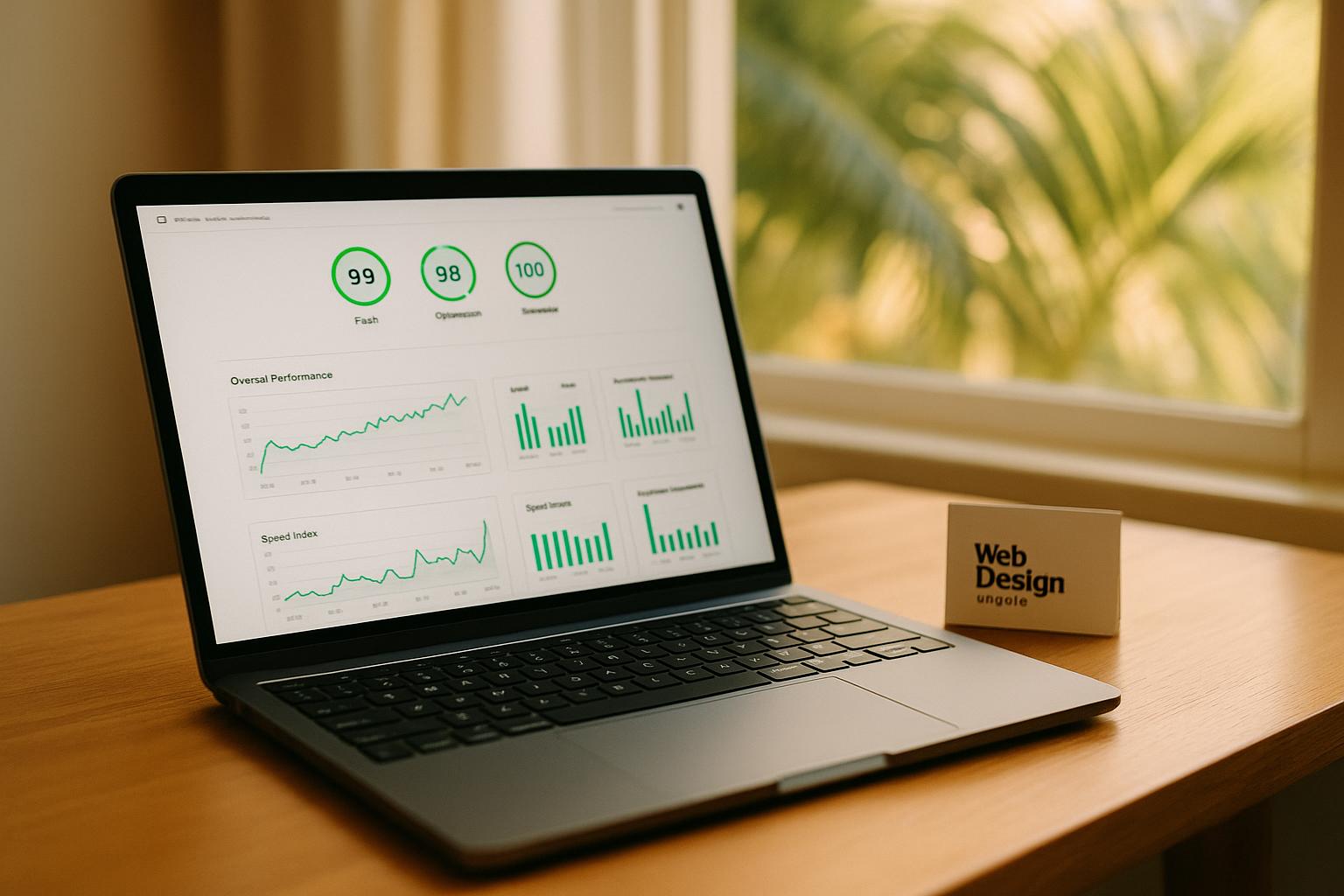
But the server sitting behind your WordPress site has a direct effect on how fast pages load, how well Google ranks you, and whether your site stays up during peak tourist season when traffic spikes. Cheap shared hosting and outdated server software are the hidden reason a lot of Hawaii small business websites feel sluggish, even after someone "optimized" them.
What We Mean by High-Performance Web Server Technology
When we talk about high-performance servers, we're referring to the combination of software and configuration that processes requests and delivers your web pages. The two most common web servers are Apache and Nginx. Apache has been around for decades and powers a huge portion of the web, but it handles traffic in a way that can bog down under heavy load. Nginx was built specifically to handle a large number of simultaneous connections without breaking a sweat.
Beyond the web server itself, the application layer matters too. PHP 8.x (the language WordPress runs on) is dramatically faster than older PHP versions that many hosts still use by default. Pair a modern PHP version with an opcode cache like OPcache, and your WordPress site is processing requests far more efficiently than it was on a legacy setup.
Add a caching layer like Redis or Memcached on top of that, and your server stops rebuilding the same page over and over for every visitor. It serves a pre-built version in milliseconds instead.
Why This Especially Matters in Hawaii
Hawaii's geographic position creates a real challenge for web performance. Mainland data centers in Los Angeles or Dallas are already 2,500 miles away. Data centers on the East Coast are even farther. Every mile between your server and your visitor adds latency, and latency means slower load times.
A high-performance server stack won't shrink the Pacific Ocean, but it does minimize the time your server spends generating a response. When a page loads in 200 milliseconds server-side instead of 1,200 milliseconds, that gap matters a lot once network distance is factored in. A Content Delivery Network (CDN) combined with a fast origin server compounds the benefit by caching static files closer to your visitors, whether they're browsing from Waikiki or the mainland.
For local businesses targeting Oahu SEO, this isn't just about user experience. Google has used page speed as a ranking signal for years, and Core Web Vitals doubled down on that. A slow site on outdated hosting quietly costs you search visibility every single month.
The WordPress-Specific Problem
WordPress is powerful, but it carries real overhead. A typical WordPress installation makes multiple database queries and PHP calls just to render a single page. If your hosting environment isn't configured to handle that efficiently, you feel it immediately in load times.
Unattended WordPress sites make this worse. Over time, plugin bloat accumulates. Plugins stop getting updated. Some introduce security vulnerabilities, and others simply slow the site down because they were written for older server environments. The result is a site that's slower, more fragile, and harder to maintain with every passing month.
This is exactly why we often recommend a full WordPress conversion for business owners who've hit a wall with their current setup. Moving to a modern stack with optimized hosting, a leaner codebase, and proper server configuration solves these problems at the root rather than patching over them indefinitely.
What a High-Performance Hosting Setup Looks Like in Practice
For a small business website in Hawaii, a well-configured hosting environment typically includes:
Nginx or LiteSpeed as the web server, handling concurrent requests efficiently
PHP 8.2 or later with OPcache enabled, so scripts compile and execute faster
Full-page caching through a tool like Redis or a server-level cache plugin, reducing database load
A CDN to serve static assets from edge locations closer to your visitors
HTTP/3 or HTTP/2 support for faster, multiplexed connections
An SSL certificate properly configured so HTTPS doesn't add unnecessary overhead
You don't have to understand every piece of that list. That's our job. But knowing these layers exist helps you ask better questions when evaluating your current host or shopping for something new.
How a Faster Server Translates to Real Business Results
Think about a Kapolei contractor whose potential customers are searching for estimates on their phones between job sites. If that contractor's website takes five seconds to load on mobile, a good chunk of those visitors leave before the page finishes rendering. Google sees that bounce behavior and it influences rankings over time.
Now imagine the same site loading in under a second because it's running on a properly configured Nginx server with full-page caching and a CDN in front of it. More visitors stay. More visitors convert. The phone rings more. That's the practical payoff of caring about server technology.
Speed also builds trust. Visitors associate a fast, clean site with a credible business. A Kailua restaurant with a website that loads instantly on the first Google result looks more professional than a competitor whose site spins for three seconds before anything appears.
You Shouldn't Have to Figure This Out Alone
Choosing the right hosting environment, configuring it correctly, and keeping your WordPress site running fast and secure is a full-time concern. Most small business owners on Oahu have better things to do with their time, and that's completely fair.
Whether you need a hosting upgrade, a full WordPress conversion, or just an honest assessment of why your site feels slow, we're here to help. Call us at (808) 470-7900 or schedule a free site audit and we'll take a look at what's actually going on under the hood.